
The dark web has long been a sanctuary for illicit activities around the world, with illegitimate businesses operating in secrecy and using cryptocurrencies to facilitate anonymous and often untraceable transactions.
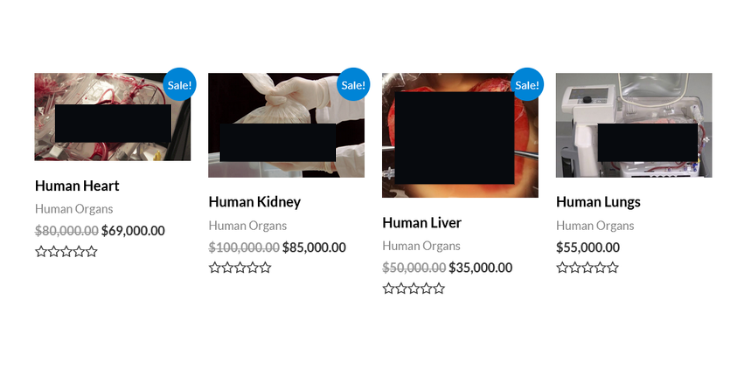
In a recent investigation, we uncovered a black market operation, which provides a range of illegal products and services including human organs (heart, lungs, kidney, liver, pancreas), hitman services (assasination, chemical assasination, staged accident assasination, kidnapping, assault, beating, arson), weapons trafficking (handguns, rifles, ammunition) poison trafficking (arsenic, cyanide, ricin, sarin, and more), drug trafficking (fentanyl, cocaine, MDMA, molly, nembutal, magic mushrooms, marijuana, and more), document forgery (forged passports, drivers licenses, ID cards), and financial forgery (counterfeit currency, cloned credit cards).
Wallet Details
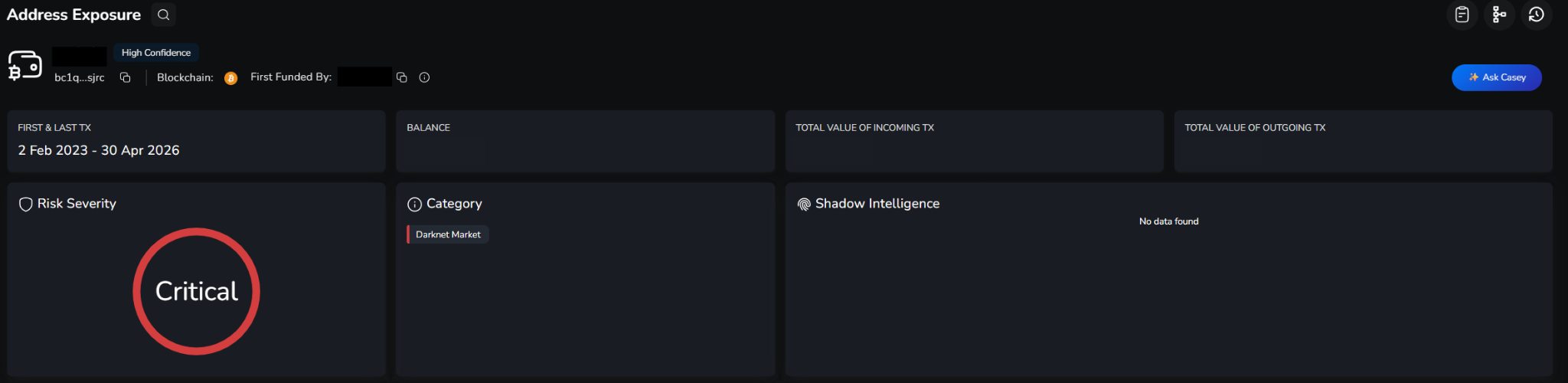
The Nominis research team traced the transactions linked to these entities, identifying their Bitcoin (bc1q********sjrc, bc1q********lawl), Ethereum (0x90********37e4), Tron (TNRV********aWtd), Solana (5CZk********oT2b), Litecoin (LSbU********R8nq), Dogecoin (D9uQ********dZ4J), and Ripple (rBvK********BoyV) wallet addresses. The oldest of these wallets dates back to 2023, and some remain active as of July 2026. Additionally, multiple of the wallets listed also appeared across four or more unique marketplaces throughout the dark web.
Exposure to Mainstream Cryptocurrency Exchanges and GEO Intelligence
Screening Bitcoin wallet (bc1q********sjrc) through the Nominis platform revealed significant exposure to one of the largest crypto exchanges in the world. Interestingly, these transactions were made directly between the above Bitcoin wallet and the exchange. Direct transactions between an entity’s payment wallet and a reputable cryptocurrency exchange are unusual because illicit actors often use intermediary wallets to obscure their funds before transacting with these exchanges. Such occurrences highlight the existing gaps in compliance protocols, allowing illicit actors to funnel funds directly through commonly used exchanges even without using intermediary wallets. Lastly, Nominis’s GEO Intelligence estimated that approximately 10% of Bitcoin wallet (bc1q********sjrc) transactions were with Canadian-linked entities.
The Importance of Crypto Compliance
The widespread use of cryptocurrency in illicit activities highlights the major importance of strong compliance measures in the crypto industry. Many regulated crypto exchanges and financial institutions implement compliance frameworks, fulfilling checks known as Know Your Customer (KYC) and Know Your Transaction (KYT) that ensure inspection and validation of the legitimacy of the wallet an organization is accepting a transaction from.
Without robust compliance frameworks, legitimate businesses risk unknowingly processing illicit funds, exposing them to legal and reputational risks. By utilising advanced threat intelligence, companies can proactively block transactions from suspicious wallets, ensuring compliance with regulatory authorities and critically, mitigating potential financial crime risks.
Final Thoughts
Our ongoing investigation into this dark web marketplace underscores the persistent challenges in combating illegal activities facilitated by cryptocurrency, while illustrating how malicious actors adapt to evade detection, requiring continuous improvements in crypto compliance efforts.
As cryptocurrency adoption continues to grow, regulatory bodies and blockchain analytics firms must work together to identify and shut down illicit operations, before they can infiltrate the mainstream financial system. Vigilance, transparency and collaboration will be key in the fight against dark web criminal enterprises.
All research content and accompanying reports are provided for informational purposes only and should not be relied upon as professional advice. Accessing these materials does not create any professional relationship or duty of care. Readers are encouraged to consult appropriately qualified professionals for guidance. We uphold the highest standards of accuracy in all the information we provide. For any questions or feedback, please contact us.

.png)

.png)