
Nominis platform: Know Your Transaction (KYT)
Crypto transaction monitoring that flags risk first
Monitor every deposit, withdrawal and transfer across 70+ blockchains, continuously and not just at onboarding. Nominis KYT is a SaaS platform you run in the Nominis dashboard or through the API. It follows funds through hops, bridges and mixers, checks them against on-chain data and human intelligence, and alerts your team in real time when a transaction breaks your own risk policy. Self-serve plans start at $399/month.
SOC 2 Type II attested by PwC. Winner of the Mastercard Fintech Forum, Athens 2025.
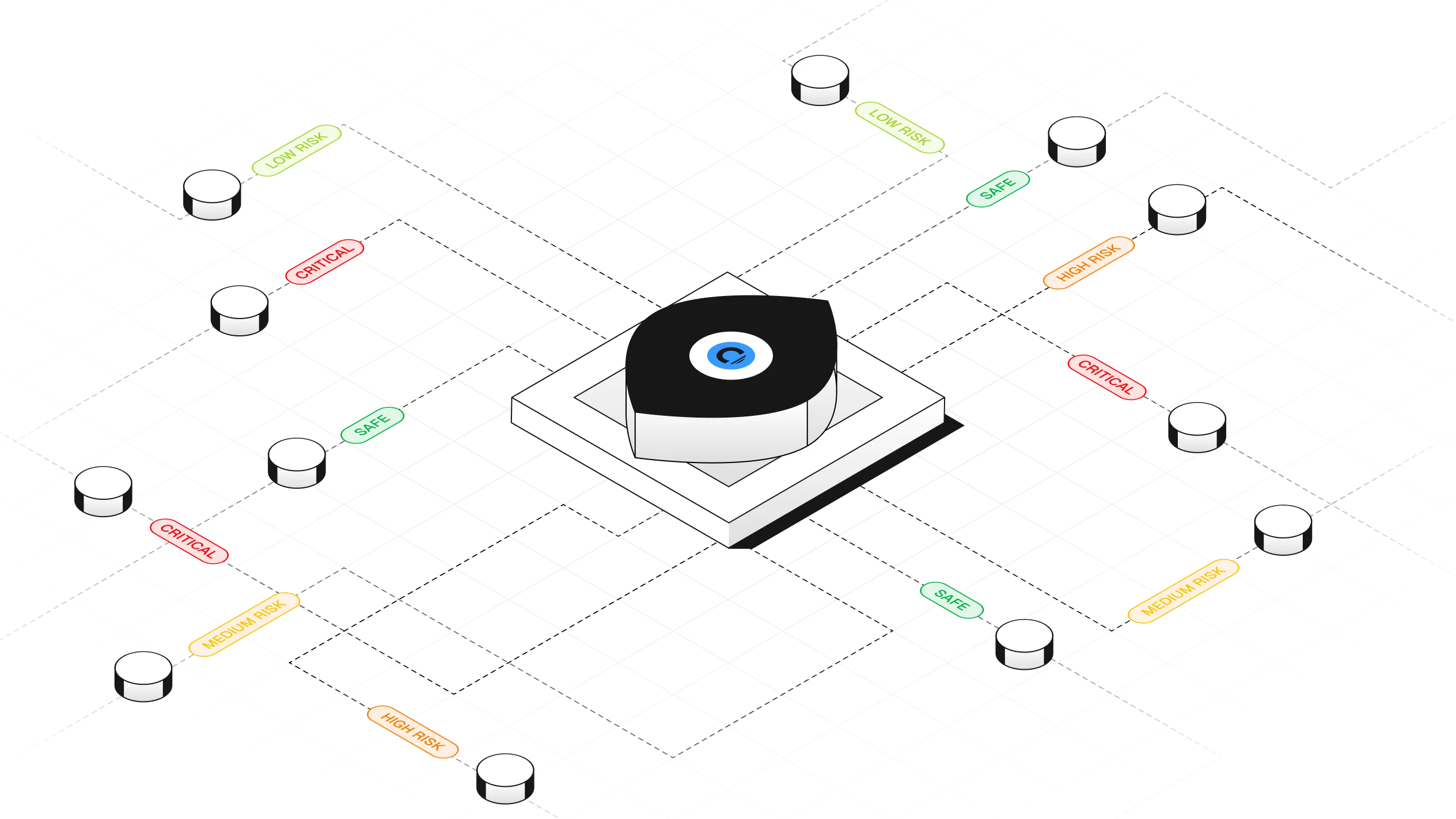
What is Know Your Transaction (KYT)?
Know Your Transaction (KYT) is the ongoing monitoring of crypto transactions to detect exposure to sanctions, scams, darknet markets, mixers, terror financing and other illicit activity. Where KYC verifies who a customer is, KYT checks where their funds come from and where they go, on every transaction and not only at onboarding.
Wallet screening tells you who you are dealing with at one moment. KYT tells you what happens afterward, every day, across every chain and every counterparty. For VASPs, exchanges, custodians and banks that handle crypto, it is the operational core of the AML program. Without it, a wallet that was clean at signup becomes a blind spot the moment funds start moving.
Why transaction monitoring matters in 2026
Regulatory pressure on digital asset firms has grown every year. FATF Recommendation 16, the Travel Rule, now applies in most major jurisdictions, and MiCA is live across the EU. The NYDFS, MAS, FCA and FinCEN have each taken enforcement action tied to weak transaction monitoring, and the Binance settlement set a $4.3B benchmark for what inadequate AML controls can cost.
Supervisors now expect ongoing, behavior-based monitoring, not just onboarding checks or after-the-fact reports. Teams that treat KYT as a checkbox fail audits. Teams that run it as live risk infrastructure pass them, and lose fewer good customers to false positives.
Why risk changes after onboarding
A wallet that passed screening last month can carry illicit funds today. Three reasons transaction monitoring matters:
Counterparties change
A clean customer wallet can start receiving funds from a sanctioned entity, a scam cluster or a hacked exchange. KYT catches the moment a counterparty's risk enters your platform.
Funds move in minutes
Bridges, instant swaps and mixers let illicit actors hop chains in seconds. Monitoring that covers one chain, or runs in batches, misses most of the path.
Labels arrive late
In one Nominis case, more than $500K moved through a wallet and on to multiple large exchanges while standard screening still rated it clean. Human intelligence had already tied it to an illicit escort service.
What you get with Nominis KYT
Continuous monitoring on 70+ chains
Inbound and outbound transfers are analyzed as they happen, including when a clean address starts interacting with a high-risk cluster.
Behavior-based alerts
Alerts fire when a transaction matches laundering typologies such as rapid chain hopping, mixing patterns, peel chains or sanctions exposure, even when no wallet in the path has a label yet.
Custom alert triggers
Set thresholds for counterparty exposure, new off-chain intelligence on a wallet, or spikes in cross-chain activity, so your team only sees what your policy cares about.
Scores on your own policy
Adjustable risk scores weight each category to your risk appetite, which keeps false positives down and alerts relevant.
Case management and audit trail
Review alerts, record decisions and escalate cases in one place, with secure, auditable records ready for regulators and auditors.
API and dashboard
Send transactions through the API as they happen, or review alerts and cases in the Nominis dashboard.
Explore the API →Six intelligence layers behind every alert
Each transaction is checked against more than on-chain labels.
On-chain
The full path of funds across 70+ blockchains, traced across 50+ hops and matched against more than 2B labelled addresses.
HUMINT
Human intelligence that ties counterparties to the real operations behind them, often before a public label exists.
Dark web
Counterparties seen on darknet markets, illicit forums and threat actor channels.
OSINT
Sanctions designations, enforcement actions, scam reports and adverse media linked to the wallets in a transaction.
Behavioral
Timing, structuring and routing patterns that signal laundering across the whole flow of funds.
Geographic
Which sanctions regimes and high-risk jurisdictions a transaction touches.
What a Nominis KYT alert includes
Risk score
A score for the transaction, weighted by your policy, with a clear level from low to critical.
Classification
Why it was flagged, for example mixer exposure, sanctioned entity involvement or links to a laundering cluster.
Path of funds
The hops, bridges and services the funds passed through before reaching, or after leaving, your platform.
Counterparty exposure
Direct and indirect exposure of the sending and receiving wallets to each risk category.
Supporting evidence
The intelligence and metadata behind the alert, so an analyst can verify the finding instead of trusting a black box.
Next step
Block the transaction, flag it for review or escalate it, automatically or by hand, with every action recorded.
How crypto transaction monitoring works: six stages
Effective KYT runs in six layered stages. Here is how Nominis handles each one.
1. Data ingestion
Transaction graphs, wallet clusters, smart contract interactions and token transfers are pulled from every chain your customers use. Nominis covers 70+ blockchains and scans more than 100,000 new wallets every day.
2. Clustering and attribution
Addresses controlled by the same entity are grouped, then identified: an exchange, a mixer, a sanctioned wallet, a darknet market, a ransomware operator or a known scam. Attribution depth is the biggest quality difference between tools.
3. Off-chain enrichment
On-chain data shows what moved. Off-chain intelligence shows who moved it and why: HUMINT, dark web market listings and threat actor chatter, leaked credentials, sanctions and PEP lists, and adverse media.
4. Real-time risk scoring
Each transaction is scored the moment it arrives for direct exposure, indirect exposure such as a wallet two hops from a mixer, behavioral deviation from the customer's baseline, and typology matches such as structuring. All weighted by your own policy.
5. Alert generation and triage
When a transaction breaks your thresholds, the alert arrives with the fund flow, attribution chain, customer history and the typology that fired, in the dashboard and through webhooks, so analysts don't start from scratch.
6. Reporting and case management
Confirmed suspicious activity becomes a SAR or equivalent report to your FIU. Case files, audit trails and historical re-screening, when new intelligence emerges, close the loop.
Where legacy KYT tools fall short
Most long-established tools were built around blockchain analytics alone. That shows in three places.
False positives that drown teams
Rule sets tuned for exhaustiveness flag too much, and alert backlogs swell into the thousands. Nominis scores against your own policy and adds context to every alert, so analysts spend their time on real risk.
No off-chain context
Tools that only see the blockchain miss the dark web listing, the leaked credential or the human intelligence that makes the call obvious. Nominis builds all six intelligence layers into the same risk decision.
Integration measured in quarters
Long enterprise rollouts leave gaps while you wait. Nominis gives you one API endpoint, webhooks for alerts and a ready dashboard, with integration typically measured in days.
Where teams use KYT
Frequently asked questions
What is KYT in crypto?
Know Your Transaction (KYT) is the ongoing monitoring of crypto transactions to detect exposure to sanctioned or illicit activity. Where KYC verifies who a customer is, KYT checks where their funds come from and where they go.
What is the difference between KYT and wallet screening?
Wallet screening checks the risk of an address at a point in time, for example at onboarding. KYT monitors every transaction on an ongoing basis and alerts you when risk appears or changes. Most compliance programs use both. Learn more about Nominis wallet screening.
Is crypto transaction monitoring required?
For most regulated crypto businesses, yes. VASPs and CASPs are expected to monitor transactions under FATF guidance and the EU's MiCA regulation, and supervisors such as the NYDFS expect ongoing, behavior-based monitoring rather than onboarding checks alone.
How does Nominis KYT catch risk other tools miss?
Most KYT tools rely on on-chain labels. Nominis adds HUMINT, dark web, OSINT, behavioral and geographic intelligence, and alerts on laundering behavior even when no wallet in the path is labelled yet. That is how Nominis has exclusively flagged more than $10B in illicit crypto.
Which blockchains does Nominis KYT monitor?
Nominis monitors 70+ blockchains, including Bitcoin, Ethereum, TRON, Solana, BNB Chain, TON and XRP, and all major stablecoins. See the full list on our blockchains page.
Can I set my own alert rules?
Yes. You can adjust risk scores by category and set custom triggers for counterparty exposure, new off-chain intelligence and cross-chain activity, so alerts follow your own compliance policy.
What happens when a transaction is flagged?
Your team receives an alert with the risk score, classification, path of funds and supporting evidence. You can block the transaction, flag it for review or escalate it, automatically or manually, and every action is recorded for audit.
Is Nominis SOC 2 compliant?
Yes. Nominis is SOC 2 Type II attested following an independent examination by PwC. Learn more on our Security and Trust page.
What is the Travel Rule?
The Travel Rule is FATF Recommendation 16. It requires VASPs to share originator and beneficiary information when they transfer crypto, in the same way banks do for wire transfers, and it now applies in most major jurisdictions.
What laundering patterns does Nominis KYT detect?
Nominis KYT detects structuring, layering and chain hopping, mixer use, sanctions exposure, darknet market activity, ransomware and extortion proceeds, terror financing, fraud and scam proceeds such as pig butchering and rug pulls, and account takeover patterns.
How long does it take to integrate Nominis KYT?
Integration is typically measured in days. Nominis provides one API endpoint for transaction flow, risk classification and exposure data, webhooks for alerts, and a ready-to-use dashboard.
Switching from another provider? See how Nominis compares with Chainalysis, Elliptic, TRM Labs and Crystal Intelligence.